Home
News
News and articles
Useful reads on warehouses, stock counts and audits.
 What a barcode is and how it is readWhat is a barcode: the bars hold only a sequence of digits, while the name and price of an item live in your database. Here is how a scanner reads the bars.
 What the digits of an EAN-13 meanWhat the digits of an EAN-13 mean: the 13 digits split into a prefix, a company number, an item number and a check digit. The prefix is not the country of origin.
 UPC vs EAN: what is the differenceUPC vs EAN: UPC-A has 12 digits and EAN-13 has 13. Scanners read both, but mixing the two formats in your database splits the stock of one product in two.
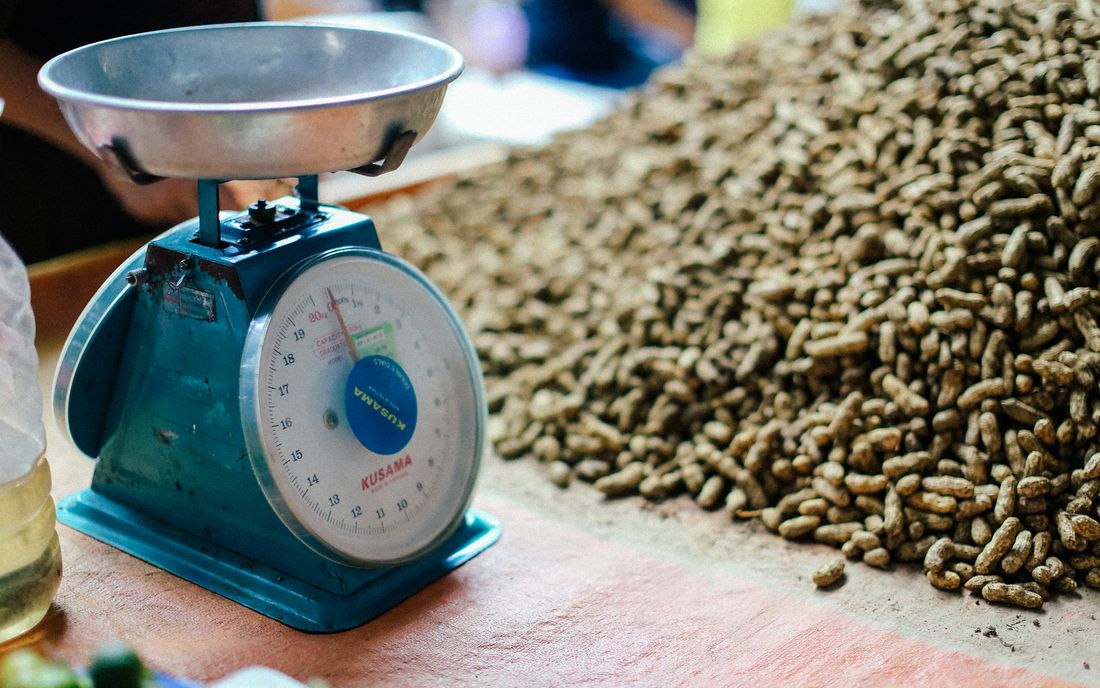 Barcodes on goods sold by weight: how a weight code worksA scale prints a fresh label for every portion: one part of the code names the item, the rest carries weight or price. Here is how the till splits it.
 Code 128: a practical code for warehouse labelsCode 128 for warehouse labels: it encodes all 128 ASCII characters, letters, digits and symbols, in a compact bar pattern, which suits internal stock labels.
 Code 39: outdated or still usefulIs Code 39 outdated: this 1974 code holds only digits, capital letters and a few symbols and is wide, but it still works in older systems and on existing labels.
All articles (40)
- What a barcode is and how it is read
- What the digits of an EAN-13 mean
- UPC vs EAN: what is the difference
- Barcodes on goods sold by weight: how a weight code works
- Code 128: a practical code for warehouse labels
- Code 39: outdated or still useful
- QR codes in the warehouse: when they beat barcodes
- QR codes on documents and handover forms: why and where
- Data Matrix: a code for tiny items
- How a check digit is calculated
- What GS1 is and why join
- Supplying a marketplace: label and barcode requirements
- How to get a barcode for your product
- Label size: how much room you need
- Direct thermal vs thermal transfer printing
- Looking after a label printer: print head, platen and sensor
- Label material: paper, polypropylene or polyester
- Adhesive type: permanent or removable
- Common barcode printing mistakes
- Storing label rolls and how printed labels age
- Print quality: contrast and quiet zones
- Why a code will not scan: 7 reasons
- Laser vs imager scanners
- Scanning in cold storage: battery, condensation and labels
- Wireless scanners: Bluetooth or a radio dongle
- Data collection terminal or a plain scanner
- Scanner settings: prefix, suffix and Enter
- Training staff to use a scanner: a one-day plan
- A scanner in your phone: is the camera enough
- Labelling storage locations: rack, row, bin
- What an SSCC pallet label is
- An internal barcode for items without one: numbering and duplicates
- Putting batch and expiry date into the code
- How to relabel returned goods
- Replacing old labels: a step-by-step plan
- Giving fixed assets inventory numbers: a system and a tag
- Designing a label template: which fields to include
- Barcodes and 1C: how the data connects
- Asset tags: what to do on transfer and write-off
- Rolling out a label system: a plan for a small business